Silver Purity Explained: The Complete Guide to .999 Fine Silver, .925 Sterling Silver & Testing Methods
 Krishna
 Published:
 Updated:
 Read time:6 Minutes
Table of contents
Have you ever bought what you believed was pure silver, only to later question its real value? In today’s market filled with counterfeits and mixed alloys, silver purity has become one of the most important factors for investors, collectors, and jewelry buyers alike. Understanding silver purity helps you protect your money and make smarter decisions.
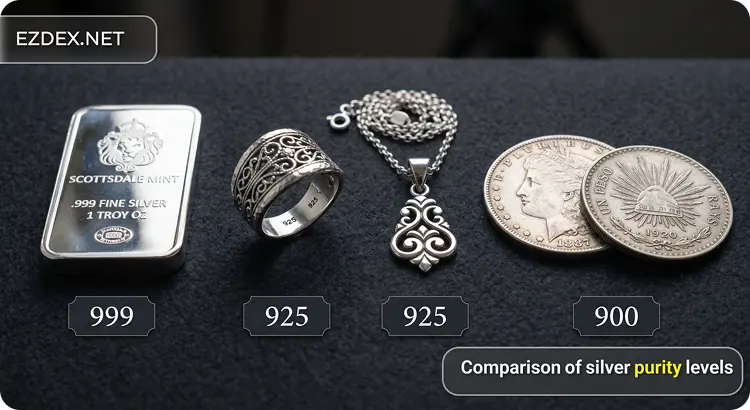
Silver purity refers to the exact percentage of pure silver contained in an item. It is measured using the millesimal fineness system, which expresses purity in parts per thousand. For example, 999 fine silver contains 99.9% pure silver, while 925 sterling silver contains 92.5% silver mixed with other metals for added strength.
What Is Silver Purity and Why It Matters
Silver in its natural state is too soft for most practical uses. Manufacturers alloy it with metals like copper to improve durability. The higher the purity number, the more silver the item contains and the closer it is to being “fine silver.”
Lower purity items are more durable but contain less actual silver by weight.
Knowing the purity level directly affects:
- Investment value (especially for bullion)
- Jewelry durability and skin safety
- Resale price and authenticity
- How you should test and care for the item
Whether you are buying silver coins, bars, or jewelry, silver purity determines both the intrinsic value and the long-term performance of your purchase.
Silver Purity Standards & Millesimal Fineness Chart
Silver purity is standardized worldwide using millesimal fineness. Here are the most common grades you will encounter:
| Millesimal Fineness | Silver Purity | Common Uses | Notes |
|---|---|---|---|
| 999 – 999.9 | 99.9%+ | Investment bars, bullion coins | Highest purity for investors |
| 958 | 95.8% | Britannia silver (UK) | Traditional British standard |
| 925 | 92.5% | Sterling silver jewelry & flatware | Most popular for jewelry |
| 900 | 90% | Coin silver (pre-1965 US coins) | Historical US circulating coins |
| 835 – 800 | 83.5 – 80% | European silverware & jewelry | Lower cost, more durable alloy |
Why Silver Purity Matters for Buyers and Investors
Higher purity silver (999) offers maximum silver content per ounce and is preferred for investment because it has the highest melt value. However, it is softer and more prone to scratches.
Sterling silver (925) is the gold standard for jewelry because the 7.5% copper alloy makes it much harder and more suitable for everyday wear. The difference in silver content means a 925 piece weighs more than a 999 piece of the same size to deliver the same amount of actual silver.
For investors, always focus on Actual Silver Weight (ASW) rather than total weight. A 1-ounce .999 silver coin contains exactly one troy ounce of pure silver. A lower-purity item must weigh more to contain the same amount of silver.
Understanding these differences protects you from overpaying and helps you choose the right product for your goal, whether that is long-term investment, wearable jewelry, or collectible coins.
How to Test Silver Purity at Home? 5 Proven DIY Methods
Before spending money on professional testing, you can perform several reliable at-home checks. These methods help you quickly determine whether an item is likely real silver and give a rough idea of its purity level. While no single home test is 100% conclusive, combining two or three methods dramatically increases accuracy.
These tests are especially useful when buying second-hand jewelry, vintage coins, or checking items without clear hallmarks.
1. Magnet Test
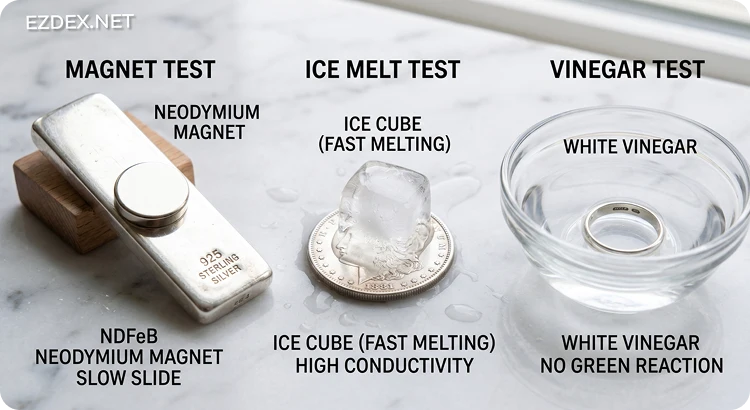
Real silver is not magnetic. This is one of the fastest ways to test silver purity at home.
How to perform the test:
- Use a strong neodymium magnet (refrigerator magnets are usually too weak).
- Hold the magnet close to the item or let it slide down a flat surface.
- Observe the reaction.
Results:
- No attraction or very slow slide = likely real silver
- Strong attraction = definitely not silver (probably steel or iron core)
Accuracy note: Many non-silver metals are also non-magnetic, so this test rules out fakes but cannot confirm high purity.
2. Ice Cube Conductivity Test
Silver has extremely high thermal conductivity. Ice melts much faster on real silver than on most other metals.
How to perform the test:
- Place an ice cube on the silver item and another ice cube on a known non-silver object (like stainless steel or plastic) for comparison.
- Time how long it takes for the ice to melt significantly.
Results:
- Ice melts noticeably faster on the silver item = high likelihood of real silver
- Similar melting speed = probably not silver or very low purity
This is a popular and surprisingly effective method for testing silver purity at home, especially for coins and flatware.
3. Vinegar and Baking Soda Test
This test checks for the presence of copper, which is commonly alloyed with silver.
How to perform the test:
- Mix baking soda and water into a paste.
- Apply the paste to the item and let it sit for 5–10 minutes.
- Rinse and check for color changes. Alternatively, soak the item briefly in white vinegar.
Results:
- No green residue and normal tarnishing = consistent with real silver
- Green or blue-green marks = high copper content (could be silver-plated base metal)
4. Hallmark and Stamp Inspection
Most genuine silver items carry official purity stamps.
What to look for:
- 925, 900, 835, or 999 marks (sometimes with country-specific hallmarks)
- Maker’s mark or manufacturer stamp
- Clear, crisp stamping (fake stamps often look blurry or uneven)
Use a magnifying glass or jeweler’s loupe in good lighting. Absence of a hallmark does not always mean fake silver, but its presence is a strong positive sign.
5. Sound or Ring Test (Best for Coins and Bars)
Real silver produces a clear, high-pitched ringing sound when struck.
How to perform the test:
- Hold the coin or bar by its edge.
- Gently tap it with another silver item or a wooden stick.
- Listen to the tone.
Results:
- Long, clear, bell-like ring = good indicator of high silver content
- Dull thud or short ring = likely alloyed or fake
Important limitation: Home tests are excellent screening tools but have limits. For expensive pieces or when buying in large quantities, always combine these methods or move to professional testing.
Understanding Silver Hallmarks and Stamps Worldwide
Hallmarks are official marks that indicate silver purity and origin. Learning to read them is essential for anyone serious about verifying silver.
Common international hallmarks include:
- 925 or Sterling — United Kingdom, USA, and most modern jewelry
- 999 or Fine Silver — Investment bullion worldwide
- 900 or Coin Silver — Historical American coins
- 835 — Common in Germany and parts of Europe
- 958 — Britannia silver (UK)
Additional marks may show the maker, year, and assay office. Always research country-specific hallmarking systems when buying international pieces. Fake hallmarks often have inconsistent fonts, poor alignment, or incorrect symbols.
Silver Purity for Jewelry vs Investment Bullion
Choosing the right purity depends entirely on your purpose.
For jewelry and wearable items:
- .925 sterling silver is ideal. The copper alloy adds strength and reduces scratching while maintaining excellent appearance and affordability.
- Higher purity (.999) jewelry exists but requires more careful handling.
For investment and bullion: - .999 or .9999 fine silver is preferred. You receive maximum silver content per dollar spent, and these pieces are easiest to sell or refine later.
- Avoid low-purity items for investment unless they have significant numismatic value.
Many investors maintain a mix: high-purity bullion for wealth preservation and sterling silver jewelry for personal enjoyment.
Remember that even .925 silver contains 92.5% pure silver, still a very high silver content compared to plated items.
Final Thoughts
Understanding silver purity empowers you to buy with confidence, whether you are building an investment portfolio or choosing meaningful jewelry. The combination of knowledge about standards, practical home tests, and professional verification methods gives you a complete toolkit.
Now that you know exactly how to evaluate silver purity, take action today:
- Check the hallmarks on pieces you already own
- Perform two or three home tests on any questionable items
- Share your results or questions in the comments below
If you found this guide helpful, save it for future reference and share it with friends who collect or invest in silver. Protecting the value of your silver starts with understanding its true purity.
Frequently Asked Questions
What does 925 mean on silver?
925 means the item contains 92.5% pure silver and 7.5% other metals (usually copper). This is the standard for sterling silver.
How do I test silver purity at home without damaging it?
Use the magnet test, ice cube test, and hallmark inspection first. These methods are non-destructive and give reliable initial results.
Is sterling silver real silver?
Yes. Sterling silver is real silver alloyed with other metals for strength. It is 92.5% pure silver.
Does higher purity silver tarnish less?
Slightly, but all silver will tarnish over time. Proper storage in anti-tarnish bags or airtight containers makes the biggest difference.
What is the best silver purity for investment?
.999 or .9999 fine silver is best for investment because you receive the maximum amount of pure silver per ounce purchased.
Can I trust silver bought online?
Only from reputable dealers who provide clear purity information, return policies, and authenticity guarantees. Always check hallmarks and consider testing high-value purchases.
Where can I get silver professionally tested?
Local jewelers, coin shops, or precious metals refiners often offer XRF testing or acid assay services for a small fee.
Latest in Silver Guides
All articles in this category