Best Month to Buy Gold: Timing Your Investment for Maximum Value
 Krishna
 Published:
 Updated:
 Read time:6 Minutes
Table of contents
While gold prices are influenced by global events, inflation, interest rates, and geopolitics, historical data reveals clear seasonal patterns that can help you make smarter decisions. In this guide, we will discuss the best months to buy gold based on decades of price history, explain why certain periods offer better value, and share tips for both investment bullion and gold jewelry.
Understanding Gold Price Seasonality
Gold does not move randomly throughout the year. There are some seasonal trends:
- Cultural and festival demand: Especially in India and China (wedding seasons, Diwali, Chinese New Year).
- Jewelry buying cycles: Peak demand in fall and winter pushes prices higher.
- Investment flows: Portfolio rebalancing at year-end and post-holiday periods.
- Summer doldrums: Lower activity in Western markets often leads to softer prices.
Historical analysis of gold prices (spanning 10–50 years) shows recurring patterns:
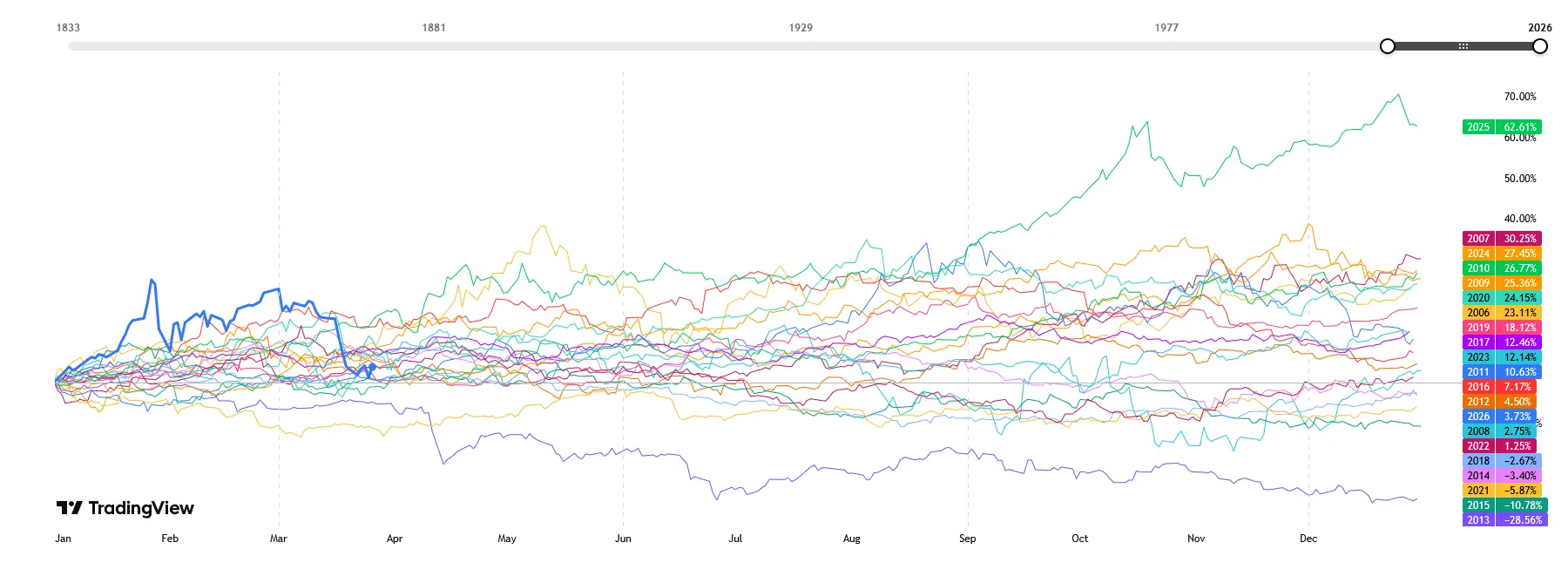 Chart source: Tradingview
- Prices often rise from late summer into winter.
- Dips or quieter periods frequently occur in spring and summer, creating buying opportunities.
Key insight: No single month guarantees the lowest price every year, but certain months statistically offer better entry points on average.
Top Months to Buy Gold Cheap
Based on average monthly gold prices and performance data, in some months of the year, gold is cheaper. Let us review which and learn why:
1. December & Early January (Often the Strongest for Value)
o December frequently shows the lowest average gold prices over the past decade.
o Post-holiday slowdown in January can keep momentum soft before new-year investment buying kicks in.
o Many sources highlight early January as one of the best times to buy gold before prices potentially climb.
2. March, April & Late Spring
o These months are often cited for relatively soft prices and lower demand.
o Spring and early summer (March–July) tend to be "quieter" periods, presenting opportunities before fall demand ramps up.
4. June, July & Summer Months (Summer Doldrums)
o June sometimes records higher average prices, but mid-June to early July is frequently recommended as a dip-buying window.
o Lower trading volumes in summer can lead to more favorable entry points for patient buyers.
⚠️Months to Approach with Caution:
August–October: Demand surges due to Asian festivals (e.g., Diwali), often driving prices higher.
November–December: Holiday gifting and year-end rebalancing can inflate premiums and spot prices.
Over longer periods (e.g., 1975–2021), gold has shown a tendency to strengthen after early-year and mid-summer lows, making those windows strategically attractive for buyers.
Best Time to Buy Gold Jewelry vs. Investment Gold
Gold Jewelry: January (post-holiday sales) and summer months (July–August) often bring retailer discounts on top of softer spot prices. Cultural peaks in fall make it more expensive.
Investment Bullion/Coins: Focus on physical gold or ETFs during low-seasonality periods like December–April or June–July to minimize premiums and capitalize on potential appreciation.
Factors Beyond Seasonality
While timing helps, these elements often override monthly patterns:
- Economic conditions: Gold shines as an inflation hedge or safe-haven during uncertainty like wars.
- Interest rates: Lower rates generally support higher gold prices.
- Geopolitical events: Wars or instability can cause sudden spikes.
- Central bank buying: Strong demand from institutions has supported prices in recent years.
- US Dollar strength: A weaker dollar typically boosts gold.
The best time to buy gold is when it aligns with your goals, not just the calendar. Strategies like buying fixed amounts regularly, reduces timing risk.
Conclusion: Is There Really a "Best" Month?
There isn't one perfect best month to buy gold that works every year cause markets are dynamic. However, historical data consistently points to December through early January, March–April, and mid-June to July as periods with statistically softer prices and better buying opportunities.
The smartest strategy is to combine seasonality with fundamental analysis. Buy when prices are reasonable relative to broader economic conditions, and hold for the long term if you're investing.
Latest in Gold Tutorials
All articles in this category