Alibaba vs Amazon: Key Differences for Buyers and Sellers
 Krishna
 Published:
 Updated:
 Read time:6 Minutes
Table of contents
Alibaba vs Amazon: which is better for buying, selling, or sourcing products? The answer depends on what you need. Alibaba is primarily designed for wholesale purchasing and connecting businesses with suppliers, while Amazon focuses on retail shopping and helping sellers reach individual customers.
Both platforms are major players in global ecommerce, but they serve different purposes. Here's a practical comparison to help you choose.
Alibaba vs Amazon at a Glance
| Feature | Alibaba | Amazon |
|---|---|---|
| Main focus | Wholesale and B2B | Retail and B2C |
| Best for | Businesses and importers | Shoppers and online sellers |
| Pricing | Often negotiable | Usually fixed |
| Minimum order | May require bulk orders | Usually one item |
| Shipping | Depends on supplier | Often faster |
| Product customization | Widely available | Limited |
| Buyer protection | Trade Assurance on eligible orders | Amazon's purchase protection |
| Fulfillment | Supplier or freight provider | Seller or Amazon FBA |
Choose Alibaba to source products, negotiate wholesale prices, or create private-label goods. Choose Amazon for convenient shopping, faster delivery where available, or selling directly to consumers.
What Is the Main Difference Between Alibaba and Amazon?
The biggest difference is their business model and target audience.
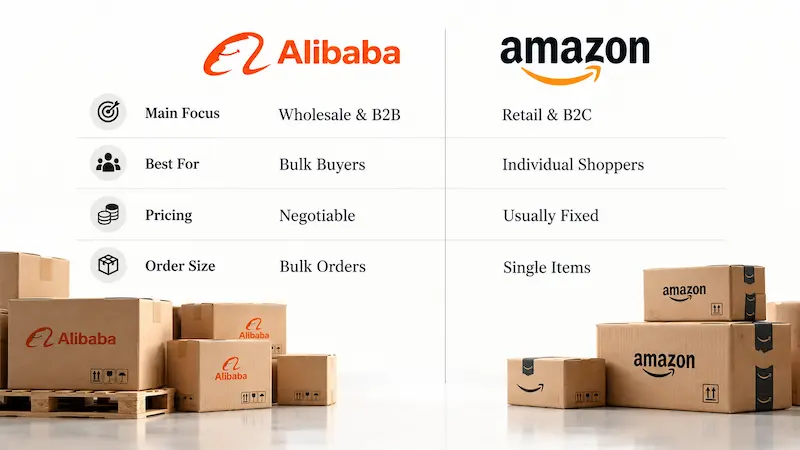
Alibaba.com operates primarily as a business-to-business (B2B) marketplace. It connects manufacturers, wholesalers, and suppliers with companies looking to purchase products, often in large quantities.
Amazon, meanwhile, is primarily a business-to-consumer (B2C) marketplace where customers buy products individually. It also provides sellers with advertising tools, logistics services, and access to a large customer base.
For example, if you need 500 customized water bottles for your brand, Alibaba may be the better choice. If you need just one water bottle delivered quickly, Amazon is usually more convenient.
Alibaba vs Amazon: Business Models
How Alibaba Works: Alibaba.com connects buyers with suppliers rather than acting as the seller for most marketplace transactions.
Its main advantages include:
- Access to manufacturers and wholesalers
- Negotiable prices and minimum order quantities (MOQs)
- Custom branding and private-label manufacturing
- International sourcing opportunities
However, buyers often need to communicate with suppliers, compare quotations, arrange shipping, and evaluate product quality before placing large orders.
How Amazon Works: Amazon combines its own retail operations with a marketplace for independent sellers.
Its main advantages include:
- Convenient ordering and checkout
- Customer reviews and product comparisons
- Fulfillment by Amazon (FBA) for eligible sellers
- Delivery and return options that vary by product and location
Amazon is generally easier for individual shoppers, while Alibaba offers greater flexibility for businesses sourcing products.
Alibaba vs Amazon for Buyers
For everyday purchases, Amazon is usually the simpler option. Customers can compare products, read reviews, and purchase a single item without negotiating with a supplier.
Alibaba becomes more attractive when purchasing wholesale quantities, particularly when customization or lower per-unit costs are important.
Keep in mind that Alibaba's listed price may not represent your final cost. Shipping, customs duties, taxes, samples, and quality inspections can increase the total.
Amazon prioritizes shopping convenience. Alibaba offers more control over sourcing and bulk purchasing.
Alibaba vs Amazon for Sellers
Amazon is generally better for reaching retail customers, while Alibaba is more suitable for manufacturers, wholesalers, and businesses selling in bulk.
Amazon sellers can list products, advertise, and use Fulfillment by Amazon (FBA) to outsource storage, packing, and delivery. However, competition and marketplace fees can reduce profit margins.
Alibaba sellers primarily target business buyers. Instead of selling individual items, they can negotiate large orders, offer customization, and build long-term wholesale relationships.
For small businesses, the choice depends on whether they want to sell directly to consumers or supply products to other businesses.
Alibaba vs Amazon: Fees and Costs
Both platforms have different pricing structures.
| Cost | Alibaba | Amazon |
|---|---|---|
| Product pricing | Often negotiable | Usually fixed |
| Seller subscription | Depends on supplier membership | $39.99/month for the US Professional plan |
| Sales fees | Depend on services and transaction terms | Category-based referral fees |
| Shipping costs | Based on supplier and order | Based on fulfillment method |
| Additional expenses | Samples, inspections, import duties | FBA, storage, and advertising |
For Amazon US sellers, the Individual plan costs $0.99 per item sold, while the Professional plan costs $39.99 per month, excluding additional selling fees.
Alibaba buyers should calculate the total landed cost rather than comparing product prices alone.
For example, an item priced at $3 on Alibaba might cost significantly more after freight, customs duties, and other expenses.
Which is cheaper? Alibaba often offers lower per-unit prices for wholesale orders, but Amazon may be more economical for small purchases.
Alibaba vs Amazon Shipping and Delivery
Shipping is another major difference between these platforms.
Alibaba Shipping: Delivery times depend on the supplier, manufacturing schedule, shipping method, and destination.
Custom products may require additional production time before shipping begins. International freight and customs clearance can also extend delivery.
Amazon Shipping: Amazon often provides faster, more predictable delivery for eligible products, particularly through its fulfillment network.
However, shipping speed varies by country, seller, product availability, and delivery address.
Verdict: Amazon usually wins on convenience and delivery speed. Alibaba is better suited to planned inventory purchases where buyers can accommodate longer lead times.
Alibaba vs Amazon: Buyer Protection
Both platforms offer purchase protection, but their systems work differently.
Alibaba Trade Assurance helps protect eligible orders against issues such as missing shipments, defective products, or goods that do not meet agreed specifications.
Amazon's A-to-z Guarantee provides protection for eligible purchases, including certain delivery, product condition, and refund problems.
To reduce purchasing risks:
- Check supplier or seller ratings and business details.
- Read product specifications carefully.
- Keep payments within the platform's protected systems.
- Request samples before placing large wholesale orders.
- Review refund conditions before purchasing.
Neither platform guarantees that every seller or product will meet expectations.
Can You Buy from Alibaba and Sell on Amazon?
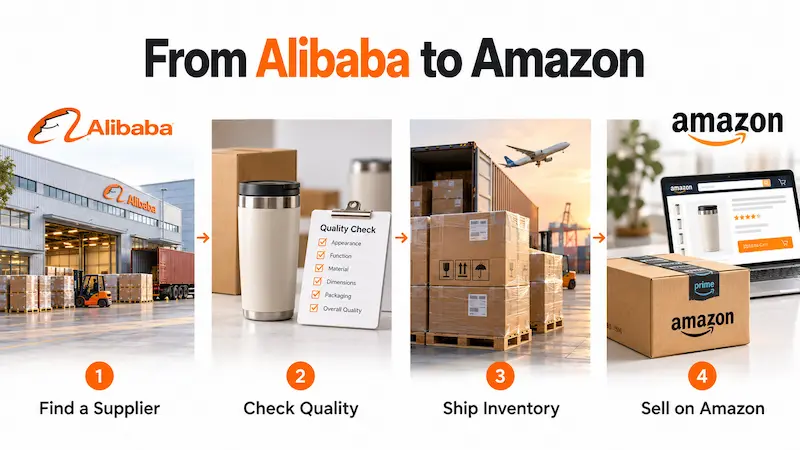
Yes. Many ecommerce businesses use Alibaba to source products and Amazon to sell them to consumers.
The process typically involves finding a supplier, ordering samples, checking product quality, purchasing inventory, and creating Amazon listings.
However, sellers must account for Amazon fees, import requirements, product compliance, intellectual property rights, and shipping costs.
A low wholesale price alone does not guarantee profitability.
Alibaba and Amazon can complement each other: one helps businesses source inventory, while the other provides access to retail customers.
Alibaba vs Amazon: Pros and Cons
Both platforms have strengths and limitations depending on how you plan to use them.
| Platform | Advantages | Disadvantages |
|---|---|---|
| Alibaba | Wholesale pricing, supplier access, product customization | Longer lead times, supplier verification, possible import costs |
| Amazon | Convenient shopping, fast delivery options, large retail audience | Higher retail prices, seller competition, marketplace fees |
For businesses importing products, Alibaba offers flexibility and opportunities to negotiate. For shoppers and retailers seeking convenience, Amazon generally provides a more straightforward experience.
Alibaba vs Amazon: Which Is Better?
There is no single winner. The better platform depends on your goals.
- For individual buyers: Amazon is generally better for small purchases and convenient delivery.
- For wholesale buyers: Alibaba is usually more suitable for bulk orders and supplier negotiations.
- For product sourcing: Alibaba offers manufacturing and private-label opportunities.
- For online sellers: Amazon provides access to retail shoppers and fulfillment services.
- For faster delivery: Amazon is typically the stronger choice for eligible products.
Businesses can also combine both platforms by sourcing inventory through Alibaba and selling finished products on Amazon.
Final Verdict
When comparing Alibaba vs Amazon, the most important factor is how you intend to use the platform.
Choose Alibaba if your priority is wholesale purchasing, supplier negotiations, or customized products. Choose Amazon if you value convenient shopping, access to retail customers, or integrated fulfillment services.
For ecommerce entrepreneurs, using Alibaba for sourcing and Amazon for selling can be an effective strategy, provided all costs and risks are carefully evaluated.
Before choosing, compare your total costs, order requirements, shipping options, and buyer protection to find the platform that best fits your needs.
Frequently Asked Questions
Is Alibaba cheaper than Amazon?
Alibaba often offers lower per-unit prices on wholesale orders. However, shipping, customs duties, and minimum order requirements may increase the final cost.
Is Alibaba safe to buy from?
Alibaba can be safe when buyers carefully evaluate suppliers, use eligible Trade Assurance protection, and verify product quality before placing large orders.
Can individuals buy from Alibaba?
Yes. Individuals can purchase from Alibaba, although some suppliers require minimum order quantities. Others accept small orders or samples.
Is Amazon better than Alibaba for sellers?
Amazon is generally better for businesses selling directly to consumers. Alibaba is more suitable for manufacturers and wholesalers targeting business buyers.
Can I buy from Alibaba and resell on Amazon?
Yes, provided the products comply with applicable laws, Amazon policies, intellectual property requirements, and product safety regulations.
Is Alibaba the same as AliExpress?
No. Alibaba.com primarily serves business buyers and wholesale sourcing, while AliExpress focuses more on consumer purchases and smaller orders.
Read: Alibaba vs Aliexpress
Latest in News
All articles in this category